
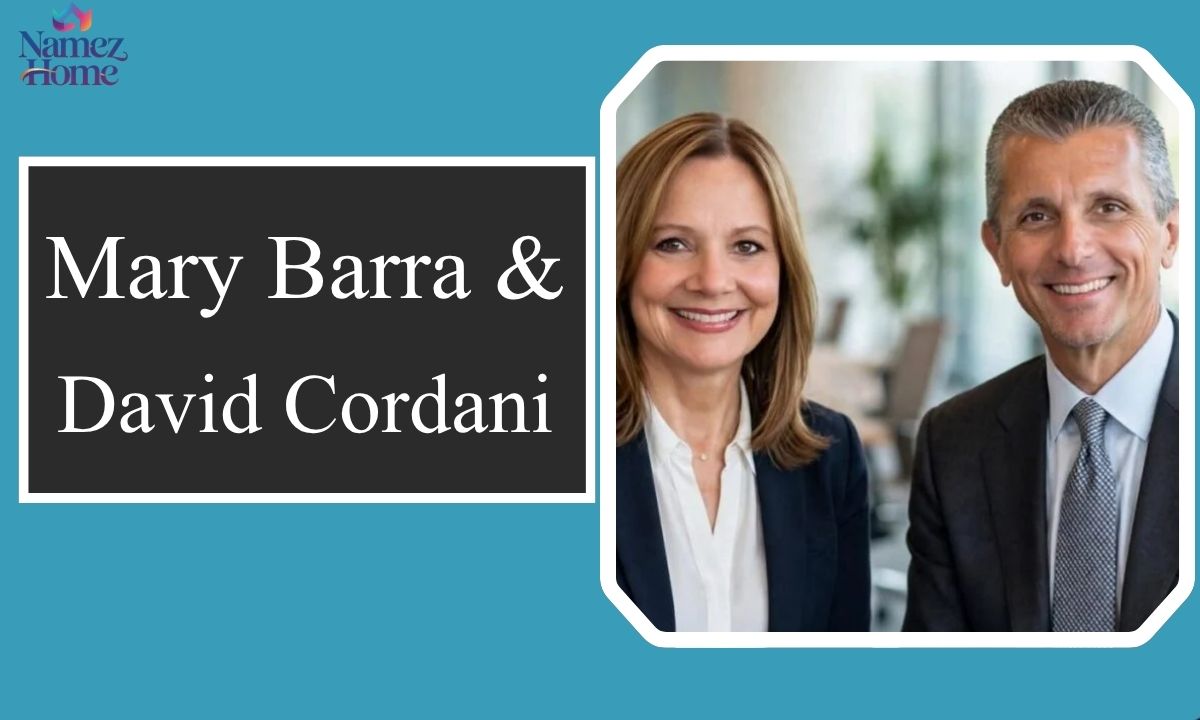

Mary Barra and David Cordani represent two very different paths to the top of corporate America today. One built a long career in automotive engineering, the other in healthcare finance and insurance. Both eventually reached the highest executive positions at their companies, shaping how General Motors and The Cigna Group operate.
Their industries could not be more different, yet their leadership journeys share plenty in common. Both spent decades building broad, cross-functional experience long before stepping into the corner office. This article breaks down their career paths, compares their leadership styles, and looks closely at what changed for each executive heading into 2026 and beyond.
Quick Bio of Mary Barra and David Cordani
| Detail | Mary Barra | David Cordani |
| Full Name | Mary T. Barra | David M. Cordani |
| Known For | General Motors leadership | The Cigna Group leadership |
| Current Role | Chair and CEO, General Motors | Executive Chair, The Cigna Group |
| CEO Role | GM CEO since 2014 | Cigna CEO from 2009 to July 1, 2026 |
| Industry | Automotive | Healthcare |
| Undergraduate Education | General Motors Institute (now Kettering University) | Texas A&M University |
| Graduate Education | Stanford Graduate School of Business | University of Hartford |
Mary Barra’s Early Career at General Motors
Mary Barra’s connection to General Motors goes back to 1980, when she joined as a co-op student at the Pontiac Motor Division. That hands-on start gave her a technical and operational view of the company most senior executives never get.
She later earned an electrical engineering degree from Kettering University, followed by an MBA from Stanford Graduate School of Business. Barra’s career in leadership grew slowly, through experience rather than shortcuts, across several decades at GM.
Moving Through Different GM Roles
Before becoming CEO, Barra held senior roles in global product development, purchasing, supply chain, human resources, and manufacturing engineering. She also served as an executive vice president. This wide-ranging executive experience across business functions gave her a rare, complete view of how a major automotive company actually runs.
Read More: Chase Stokes Height: How Tall Is the Outer Banks Star?
Mary Barra and the Changing Auto Industry
The automotive industry has transformed dramatically during Barra’s tenure as CEO. Electric vehicles, software, connected technologies, and autonomous driving systems now define competition. GM’s own leadership messaging highlights her focus on electrification and automotive technology as core priorities.
Barra’s background in engineering, manufacturing, and product development positions her well for this shift. Leading through industry change requires more than vision. It requires understanding operations deeply enough to execute that vision across a massive organization.
David Cordani’s Career in Healthcare
David Cordani’s professional career followed a completely different route through the healthcare industry. He earned an accounting degree from Texas A&M’s Mays Business School in 1988, later adding an MBA from the University of Hartford. His path combined financial training with decades of healthcare business experience.
Cordani became Cigna CEO in 2009 and remained in that role for almost 17 years. During that period, the company shifted from a traditional insurance business into a much broader health-services model, reshaping its entire business structure.
Building a Broader Healthcare Business
A defining moment in Cordani’s career came in 2018, when Cigna acquired Express Scripts. That deal laid the foundation for Evernorth, Cigna’s health-services division. It marked a major expansion beyond insurance and became central to Cordani’s legacy as a corporate executive.
David Cordani’s Leadership Transition in 2026
There’s an important update worth noting here. Cordani is no longer Cigna’s CEO. The company announced in March 2026 that he would retire from the CEO role effective July 1, 2026, moving into the Executive Chair position instead.
Brian Evanko succeeded him as CEO, with both executives working closely through the handoff. This leadership transition means older content describing Cordani as Cigna’s active CEO is now outdated and should reflect his new Executive Chair title.
What Mary Barra and David Cordani Have in Common
Despite working in completely different industries, Barra and Cordani’s leadership careers share some clear patterns. Both reached senior management through years of steady progression rather than fast-tracked promotion, and both built genuine expertise before leading.
Looking closer at their journeys reveals three shared themes worth exploring: long careers, broad functional experience, and leadership through industry disruption. Each theme says something important about what it actually takes to lead a major organization.
Both Developed Long Careers
Neither executive reached the top overnight. Barra joined GM in 1980 and didn’t become CEO until 2014, a 34-year journey. Cordani spent years building healthcare industry expertise before becoming Cigna’s CEO in 2009. Their professional careers prove that senior leadership is usually earned slowly, not granted quickly.
Both Gained Experience Across Business Functions
Barra’s GM career spanned engineering, human resources, manufacturing, purchasing, and supply chain. Cordani’s responsibilities expanded significantly as Cigna grew into health services. This kind of cross-functional experience across business functions consistently shows up in executives who eventually reach the highest levels of corporate leadership.
Both Led Through Industry Change
Barra has guided GM through automotive technology shifts including electrification and autonomous driving. Cordani led Cigna through healthcare’s move toward integrated health services. Both examples show that organizational leadership today demands constant adaptation, not just steady management of the status quo.
How Their Careers Differ
While their leadership journeys rhyme in places, Barra and Cordani’s careers diverge sharply in execution. Their industries, training, and current executive positions all reflect very different professional worlds, shaped by different markets and demands.
Understanding these differences matters just as much as the similarities. It shows there’s no single blueprint for reaching senior executive positions, only different combinations of experience, timing, and adaptability.
Different Industries
Barra’s career is rooted firmly in automotive engineering, manufacturing, and technology. Cordani’s is built on healthcare, insurance, and health services. These industries operate under different regulations, serve different customers, and face entirely different competitive pressures, shaping how each leader approached corporate strategy.
Different Educational Backgrounds
Barra started with an electrical engineering degree before adding an MBA later. Cordani began with an accounting degree from Texas A&M, then completed his own MBA. Both combined technical or financial training with business education, though their starting points reflect very different academic foundations.
Different Leadership Positions in 2026
Barra continues holding the combined Chair and CEO title at General Motors. Cordani transitioned from CEO to Executive Chair of the Board of Directors in July 2026, handing daily operations to Brian Evanko. These differing structures reflect two distinct approaches to leadership continuity.
What Their Careers Reveal About Corporate Leadership
Barra and Cordani’s stories highlight a clear truth about executive careers: broad experience across business responsibilities consistently prepares leaders for top roles. Neither one specialized narrowly. Instead, both accumulated exposure across multiple functions before reaching senior management.
Adaptability stands out as the second major lesson. Changing industries, whether automotive or healthcare, demand leaders who evolve continuously. As one industry observer put it, “Longevity in leadership isn’t about staying the same. It’s about staying useful while everything around you changes.”
Mary Barra and David Cordani in 2026
Mary Barra remains firmly in place as Chair and CEO of General Motors, continuing to steer the company through automotive technology shifts, electrification, and software development. Her leadership role hasn’t changed, even as the industry around her keeps moving fast.
David Cordani, meanwhile, has entered a new chapter. After nearly 17 years as CEO, he now serves as Executive Chair while Brian Evanko runs Cigna day to day. Together, their 2026 positions show two very different, equally valid models of executive transition.
FAQs
Who is Mary Barra?
Mary Barra is the Chair and CEO of General Motors, a role she has held since becoming CEO in 2014 and Chair in 2016. Her career at GM spans over four decades across multiple business functions.
When did Mary Barra become CEO of General Motors?
Mary Barra became CEO of General Motors in January 2014, after holding several senior positions across product development, manufacturing, and supply chain within the company.
Who is David Cordani?
David Cordani is a longtime healthcare executive who served as CEO of The Cigna Group from 2009 until July 1, 2026. He now serves as Executive Chair of the company’s Board of Directors.
Who replaced David Cordani as Cigna CEO?
Brian Evanko succeeded David Cordani as CEO of The Cigna Group, officially taking over the role on July 1, 2026, following a planned leadership transition.
What do Mary Barra and David Cordani have in common?
Both built long professional careers within major organizations, gained broad experience across business functions, and eventually reached senior executive positions at the highest levels of their companies.
Final Thoughts
Mary Barra and David Cordani followed very different roads, yet both arrived at senior executive positions through patience, breadth, and adaptability. Their industries couldn’t be more different, but the underlying formula for reaching corporate leadership looks remarkably similar.
Barra continues leading General Motors through one of the biggest shifts in automotive history. Cordani, after shaping Cigna’s transformation into a broader healthcare business, now supports that mission from the boardroom. Together, their careers offer a genuinely useful case study in modern executive leadership.

Jaxon is the voice behind Namez Home, bringing creative name ideas, meanings, and naming inspiration to audiences worldwide.