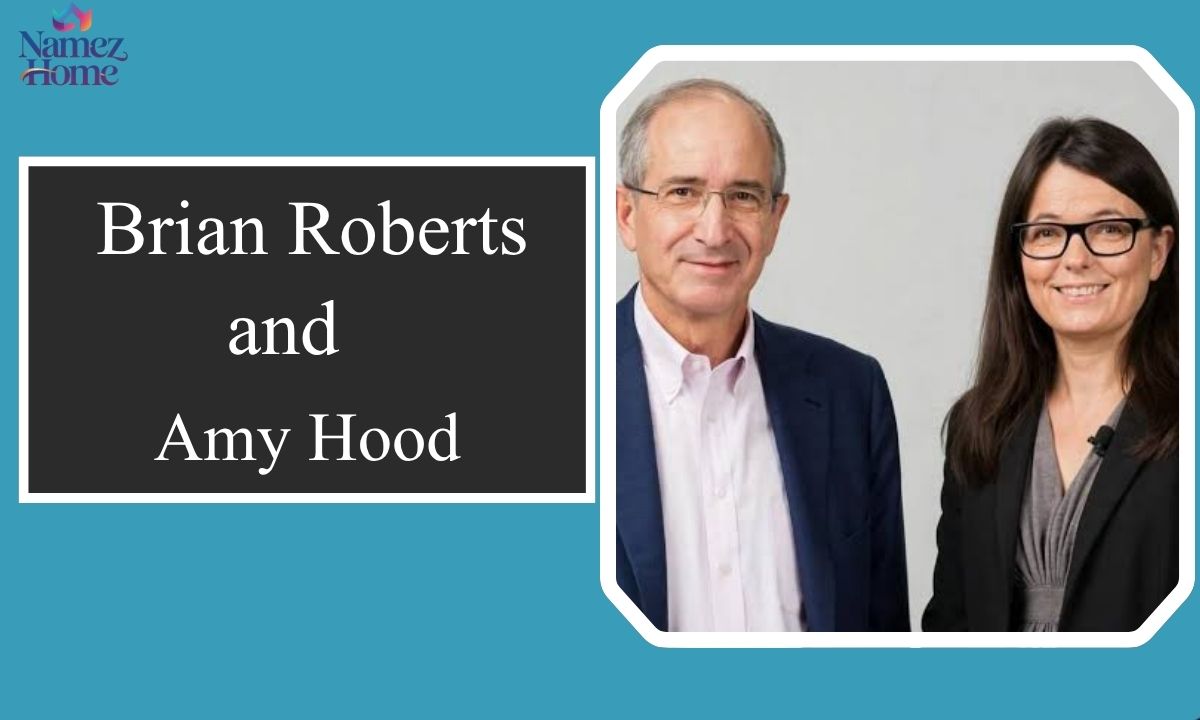

Brian Roberts and Amy Hood sit at the top of two very different worlds. One runs a global media company. The other funds a tech giant’s AI ambitions.
Both names come up often when people talk about powerful business leaders in the media industry and tech industry. This article breaks down who they are, what they’ve built, and why 2026 marks a turning point for each of them.
Brian Roberts and Amy Hood Quick Facts
Quick Bio: Brian Roberts
| Field | Detail |
| Full Name | Brian L. Roberts |
| Company | Comcast |
| Title | Chairman & Co-CEO |
| Joined | 1990 (as President) |
| Key Deals | NBCUniversal (2011), Sky (2018) |
| 2025 Compensation | $35.15 million |
Quick Bio: Amy Hood
| Field | Detail |
| Full Name | Amy E. Hood |
| Company | Microsoft |
| Title | EVP & CFO |
| Joined | 2002 (CFO since 2013) |
| Key Deals | GitHub, LinkedIn, Activision Blizzard |
| Education | Duke University, Harvard Business School |
Who Is Brian Roberts?
Brian L. Roberts has led Comcast since 1990. He’s spent over three decades turning a regional cable operator into one of the largest media and telecom companies on earth.
His fingerprints are on nearly every major Comcast deal since the 1990s. Today, the company employs over 180,000 people and pulls in more than $120 billion a year.
Brian Roberts’ Rise at Comcast
Roberts became president of Comcast in 1990, when the company made $657 million annually. He took the CEO title in 2002, then added chairman in 2004, steadily climbing the ladder over 14 years.
Comcast’s Growth Under Brian Roberts
Under his watch, Comcast transformed from a modest cable provider into a global media company. Customer counts, revenue, and market reach all multiplied. Few executives in the telecom industry can claim this kind of sustained expansion.
Major Deals: NBCUniversal and Sky
Two acquisitions define his legacy. Comcast bought NBCUniversal in 2011 and Sky in 2018. Both deals expanded Comcast far beyond cable, adding studios, networks, and a genuine international footprint.
What Comcast Looks Like Today
Comcast now runs broadband, wireless, and video streaming through Xfinity and Comcast Business. Its media arm includes NBC, Telemundo, Universal, and Peacock, spanning news, sports, film, and streaming.
Read About: Diane von Furstenberg and Jake Gyllenhaal: Biography & Family
Comcast’s New Leadership Structure in 2026
Comcast entered 2026 with a major shakeup. Michael J. Cavanagh became co-CEO alongside Roberts on January 1, becoming the first non-Roberts-family CEO in company history.
This shift reflects long-term succession planning as Comcast faces intense streaming competition. The company also restructured its cable holdings, splitting off a chunk of its traditional TV business.
Meet Co-CEO Michael Cavanagh
Cavanagh joined Comcast in 2015 as CFO, later becoming president in 2022. Before that, he spent 20-plus years in finance, including as co-CEO of JPMorgan Chase’s investment bank.
Why Comcast Made This Change
Comcast needed fresh leadership to navigate a shifting media landscape. Handing co-CEO duties to a finance veteran signals the company is prioritizing operational discipline alongside Roberts’ strategic, founder-level vision.
The Versant Media Group Spinoff
Comcast spun off most of its cable TV networks into a new public company called Versant Media Group in January 2026. Mark Lazarus leads Versant, separating linear TV from Comcast’s core growth businesses.
2025 Executive Compensation Breakdown
Pay figures reveal how Comcast is rewarding this transition. Cavanagh’s package jumped sharply, tied to his promotion, while Roberts’ compensation grew modestly.
| Executive | 2025 Total Pay | Change vs. Prior Year | Notable Components |
| Brian Roberts | $35.15 million | Up ~4% | $2.6M salary, $23.5M stock, $8.6M bonus |
| Michael Cavanagh | $71.8 million | Up ~154% | Large stock award tied to co-CEO promotion |
Who Is Amy Hood?
Amy E. Hood has served as Microsoft’s Executive Vice President and CFO since 2013. She holds the distinction of being the first woman to run Microsoft’s finances.
Her fingerprints are on Microsoft’s biggest deals of the last decade. She’s also become one of the most recognized business leaders in enterprise tech.
Amy Hood’s Path to Microsoft CFO
Hood earned an economics degree from Duke University in 1994, followed by an MBA from Harvard Business School. She started her career in investment banking at Goldman Sachs before joining Microsoft.
Becoming Microsoft’s First Woman CFO
Hood joined Microsoft in 2002, working through investor relations and strategy roles. By 2013, she’d earned the CFO title, a milestone that reshaped Microsoft’s executive leadership team.
Landmark Deals Under Her Watch
Hood oversaw three of Microsoft’s largest acquisitions: GitHub for $7.5 billion, LinkedIn for $26 billion, and Activision Blizzard for $69 billion. Each deal expanded Microsoft’s footprint well beyond software.
Stock Performance and Financial Impact
Microsoft’s stock rose nearly 300% during Hood’s first five years as CFO. That kind of growth cemented her reputation as one of the sharpest financial minds in the tech industry.
Amy Hood’s Role in Microsoft’s AI Strategy
Hood’s financial leadership now centers heavily on AI infrastructure. Microsoft’s revenue has more than tripled during her tenure, reaching $281.7 billion in fiscal year 2025, a 15% jump from the prior year.
She’s been instrumental in funding Microsoft’s biggest AI bets, shaping how the company spends billions on data centers and cloud capacity.
Revenue Growth Under Hood
Microsoft’s financial trajectory under Hood tells a clear story. Revenue climbing past $280 billion reflects cloud and AI growth across Azure, Office, and gaming, all steered by her budgeting decisions.
Funding Microsoft’s AI Bets
Hood has directed massive spending toward the OpenAI partnership and expanding data center capacity. These investments fuel Microsoft’s AI ambitions, positioning the company as a leader in enterprise AI tools.
How Her Leadership Shapes Azure and Copilot
Every dollar Microsoft pours into Azure and Copilot passes through Hood’s financial strategy. Her decisions directly determine how fast Microsoft can scale its AI products against rivals.
Recognition and the 2026 Duke Commencement Address
Duke University selected Hood as its Class of 2026 commencement speaker. She delivered her address on May 10, 2026, at Wallace Wade Stadium, receiving an honorary Doctor of Humane Letters.
Her speech focused on career unpredictability. She’s also a regular fixture on major business power rankings.
The Wallace Wade Stadium Speech
Hood addressed graduates directly, sharing lessons from her own winding career path. The honorary doctorate marked a full-circle moment, returning to her alma mater as a celebrated business leader.
Key Takeaways from Her Advice
“Careers rarely follow a straight path,” Hood told graduates, encouraging them to stay curious and invest in relationships. Her advice reflected decades of navigating Microsoft’s evolving priorities and challenges.
Other Honors and Recognition
Hood has repeatedly appeared on Forbes’ list of the 100 most powerful women, ranking 16th in 2025. She also shows up regularly on Fortune and Barron’s power rankings.
Life Outside Microsoft
Beyond her corporate role, Hood and her husband hold a minority ownership stake in the Seattle Sounders, a Major League Soccer club, showing her interests extend past pure finance.
Brian Roberts vs. Amy Hood: Different Industries, Similar Influence
Roberts and Hood operate in completely different sectors, media and telecom versus enterprise tech. Yet their careers share striking parallels worth examining side by side.
Both have built decades of institutional knowledge. Both oversee massive capital decisions. And both continue steering their companies through periods of real disruption.
Longevity and Institutional Knowledge
Roberts has led Comcast for over three decades. Hood has spent more than 20 years at Microsoft, including 13 as CFO, giving both unmatched institutional memory within their organizations.
Dealmaking Track Records Side by Side
Roberts oversaw NBCUniversal and Sky. Hood oversaw GitHub, LinkedIn, and Activision Blizzard. Below is a quick comparison of how their leadership stacks up.
| Category | Brian Roberts | Amy Hood |
| Company | Comcast | Microsoft |
| Current Title | Chairman & Co-CEO | EVP & CFO |
| Years in Leadership | 30+ | 13+ as CFO |
| Signature Deals | NBCUniversal, Sky | GitHub, LinkedIn, Activision Blizzard |
| 2025/2026 Milestone | Cavanagh named co-CEO | Duke commencement speaker |
Leading Through Disruption
Roberts navigates streaming competition and a restructured cable business. Hood navigates the AI race and enormous infrastructure spending. Different battles, similar pressure to keep their companies ahead.
Why Both Keep Landing on Power Lists
Sustained results explain their staying power. Analysts and industry publications consistently recognize both for steering massive organizations through years of technological and competitive change.
Frequently Asked Questions
Is Brian Roberts still CEO of Comcast in 2026?
Yes. He remains Chairman and Co-CEO, now sharing the CEO title with Mike Cavanagh, who took on the co-CEO role starting January 1, 2026.
Is Amy Hood still Microsoft’s CFO?
Yes. She continues serving as Executive Vice President and Chief Financial Officer, a role she’s held since 2013.
How long has Amy Hood been Microsoft’s CFO?
Since 2013, making her the first woman to hold that position in Microsoft’s history, a tenure spanning more than a decade.
Who is Comcast’s new co-CEO?
Michael J. Cavanagh, a former JPMorgan Chase executive who joined Comcast in 2015, became co-CEO alongside Roberts at the start of 2026.
What is Versant Media Group?
Versant Media Group is the company Comcast created by spinning off most of its cable TV networks in January 2026, led by CEO Mark Lazarus.
Final Thoughts
Brian Roberts and Amy Hood represent two different paths to lasting influence. One guides a media and technology giant through leadership transition. The other funds an AI transformation reshaping enterprise software.
Both prove that steady, deal-driven leadership still wins in fast-changing industries. Their next moves through 2026 will shape how millions of people watch, work, and connect online.

Jaxon is the voice behind Namez Home, bringing creative name ideas, meanings, and naming inspiration to audiences worldwide.